Molecular Plant Pathology,10 February 2026
The Tomato Transcription Factor RAV Affects the Systemic Infection of TYLCV by Interacting With V2
Author
Chenwei Zhang*, Xin Jia, Guiyan Fan… Zihan Liu, Zhehao Yuan, Yongmin Chen*
*: Department of Agriculture and Food Science, Modern Agricultural Science and Technology Laboratory, Shijiazhuang University, China.
Abstract
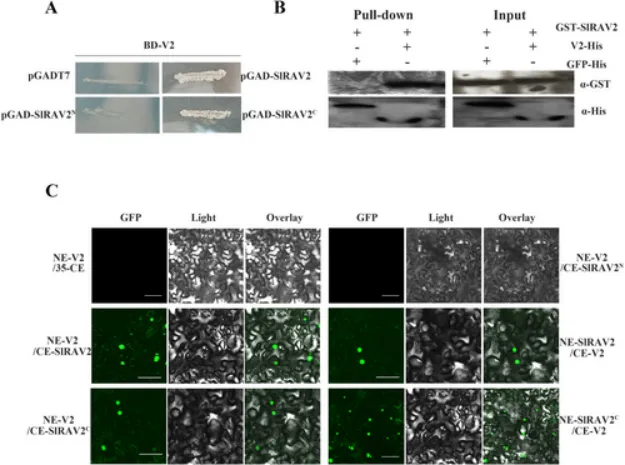
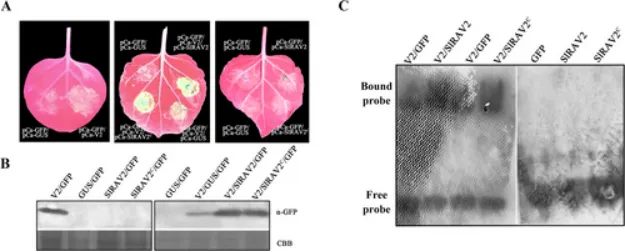
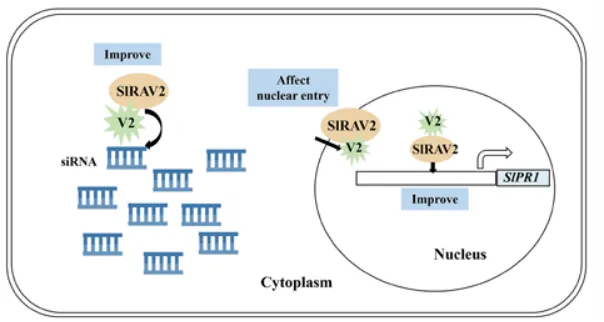
Tomato yellow leaf curl virus (TYLCV) is a widely distributed pathogen responsible for tomato yellow leaf curl disease. However, the molecular mechanism underlying TYLCV infection and the plant antivirus pathway remains unclear. This study reports that tomato (Solanum lycopersicum) RELATED TO ABSCISIC ACID INSENSITIVE3/VIVIPAROUS2 (SlRAV2), a transcription factor of the APETALA2/ETHYLENE RESPONSE FACTOR (AP2/ERF) superfamily containing an AP2/B3 DNA-binding domain, suppresses systemic TYLCV accumulation by interacting with the V2 protein, an RNA silencing suppressor (RSS) encoded by TYLCV. Transient overexpression and silencing of SlRAV2 altered TYLCV levels in systemic leaves, prompting us to investigate the underlying mechanism. Molecular analyses revealed that SlRAV2 directly binds to the promoter of the pathogenesis-related protein 1 (SlPR1) gene, thereby activating its expression and contributing to basal defence responses. V2 affects the nuclear import of SlRAV2 through protein-protein interaction and recruits SlRAV2 to bind more 21-nt double-stranded siRNA, thereby enhancing its own RSS activity and transiently increasing local TYLCV accumulation. Moreover, nuclear-localised V2 increases SlRAV2 binding affinity for the SlPR1 promoter, resulting in elevated SlPR1 transcription and concomitant accumulation of reactive oxygen species (ROS). Our findings reveal a novel antiviral mechanism whereby SlRAV2 interacts with V2 to enhance the local accumulation of TYLCV transiently, causing localised cell necrosis and preventing viral spread from infiltrated leaves to systemic leaves, thereby suppressing the systemic infection of TYLCV.





 10个月宝宝每天需要喝多少奶粉?

